Skip to content
Home » How to Use Google Ads for E-commerce Success
How to Use Google Ads for E-commerce Success
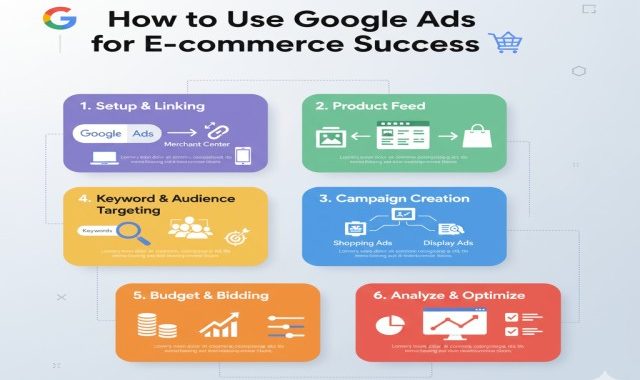
Starting an online store in itself is exciting, but reaching the right customers might be tough. That is where Google Ads come into place. While billions of searches go on every day, Google Ads help an e-commerce business reach people who mean business. This article will explain exactly how to use Google Ads to boost your e-commerce sales and achieve some real success.
1. How to Harness the Power of Google Ads for E-commerce
Paid advertising with Google Ads is a sure way for your products to appear at the very top of Google’s search results. In fact, when people search for any product like yours, your ad could pop up in an instant, giving you direct access to potential customers.
Why Google Ads is great for e-commerce:
You reach customers who are actively looking to buy.
You pay only when someone clicks on your ad: the PPC model.
You can select target audiences, locations, and devices.
It gives instant visibility, unlike organic SEO, which takes time.
Utilizing smart strategies, Google Ads are able to drive highly targeted traffic that converts into real sales.

2. Select the Right Type of Google Ads Campaign
Google has many ad types, not all of which are the best fit for e-commerce. This means the first step to success is choosing the right campaign type.
Best campaign types for e-commerce:
Shopping Ads: Showcase your product image, price, and brand directly in search results. Perfect for online stores.
Search Ads: These are text-based ads shown when people search for precise keywords. This is fantastic for high-demand products.
Display Ads: These are ads that appear visually on websites, blogs, or YouTube. This is best utilized for brand awareness and retargeting.
Performance Max Campaigns: This is a smart campaign type on Google, which automatically displays your ads across all Google platforms using AI.
YouTube Ads: These are small videos to visually show off your products and drive more engagement.
Each kind of campaign has a different purpose, so it’s all about the choice depending on your aim: awareness, traffic, or sales.

Continue reading→